Skip to content

Steam Room Waterproofing Systems

Spa waterproofing is essential for protecting home steam rooms from intense moisture and heat exposure. Unlike standard bathrooms, steam rooms generate continuous vapor that can penetrate floors, walls, ceilings, and seating structures if not properly contained. ProLux Materials steam room waterproofing systems use bonded waterproof membranes and compatible components installed beneath tile and finishes to create a fully sealed enclosure. Designed exclusively for residential and intermittent use, these systems help manage vapor at the structural level and protect surrounding areas from hidden moisture damage.

There are no products matching your search

View all products
Durable Steam Room Waterproofing Solutions

Durable Steam Room Waterproofing Solutions

Steam rooms place extreme demands on construction materials due to sustained heat and high vapor pressure. Without proper spa waterproofing, vapor can migrate through grout lines, joints, and tile assemblies, eventually reaching wall framing, ceiling cavities, benches, and subfloors. Over time, this can lead to deterioration of structural materials and moisture-related damage outside the steam enclosure.

ProLux steam room waterproofing systems use steam-rated waterproof membranes and compatible substrates installed beneath tile on walls, ceilings, floors, benches, and seating areas. These components form a continuous vapor-tight barrier when properly detailed at seams, corners, and penetrations using waterproof joint tapes and accessories. Rather than relying on grout or surface sealers, the system controls moisture behind the finished surfaces where vapor exposure is most intense.

By sealing the entire enclosure, including overhead and horizontal surfaces, ProLux systems help prevent condensation from escaping into adjacent rooms. The membranes also create a stable, tile-ready surface that supports consistent tile adhesion while maintaining the clean, refined appearance expected in residential spa spaces.

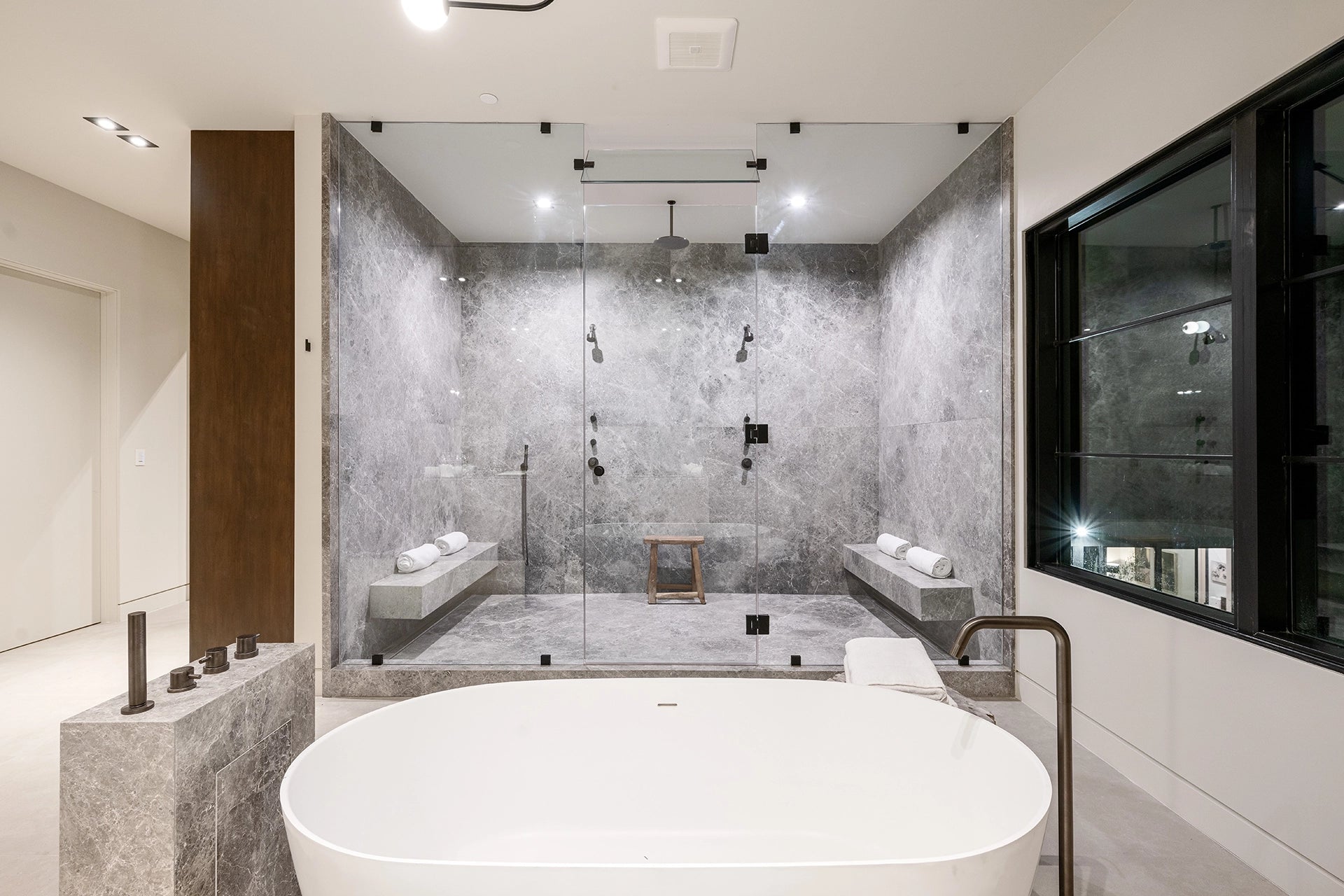
Why Steam Room Waterproofing Is Essential

Why Steam Room Waterproofing Is Essential

  • Seals ceilings where steam concentrates
    Waterproofing overhead surfaces helps prevent vapor from penetrating ceiling assemblies and causing long-term deterioration.
  • Protects benches and seating areas
    Fully sealed seating surfaces help resist moisture-related swelling, cracking, or internal damage over time.
  • Defends floor assemblies
    A continuous waterproof layer blocks condensation from reaching the subfloor and structural base beneath tile.
  • Safeguards wall structures
    Vapor barriers help prevent moisture drive from affecting studs, insulation, and concealed framing.
  • Preserves residential spa spaces
    Designed for intermittent use, proper steam room waterproofing supports durability and reduces long-term maintenance needs.

Waterproofing a steam room protects more than visible finishes. It safeguards the entire enclosure from vapor-related damage. With ProLux systems, residential steam rooms remain secure, efficient, and ready for everyday relaxation.

Free Shipping

To the U.S. mainland

Highly Rated

250+ five star reviews

Chat With Us

Live chat during business hours

Design & Layout

free personalized installation plans

FREQUENTLY ASKED QUESTIONS

Do I need to waterproof the ceiling of a steam room?

Yes. Steam rises and concentrates at the ceiling, making it one of the most critical areas to waterproof to prevent vapor penetration and long-term damage.

Can benches in a steam room be waterproofed?

Absolutely. Benches and seating areas should be sealed with the same waterproofing system to protect internal structures from constant moisture exposure.

Is residential steam room waterproofing different from commercial systems?

Yes. ProLux systems are approved for residential and intermittent use only and are not intended for commercial or continuously operating steam rooms.

How does waterproofing protect the floor of a steam room?

Waterproofing creates a vapor barrier beneath the tile that prevents condensation from reaching the subfloor, helping protect the structural base from long-term moisture damage.

RELATED SUBCOLLECTIONS